Focused arrival windows
Useful updates and clear arrival timing.
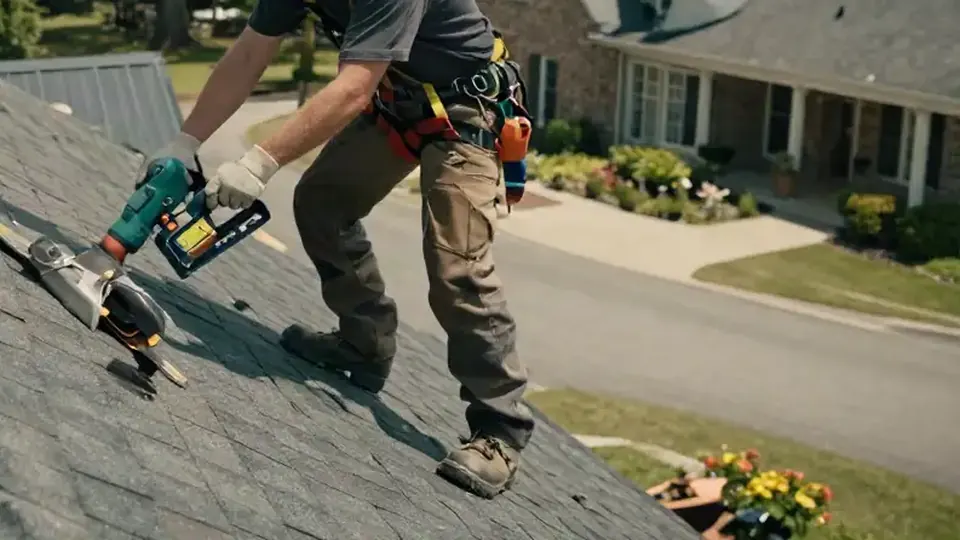
When water is coming through the ceiling during a storm, the first goal is simple: stop more water getting in. Tell us what is happening and we will explain what can be done to protect the house now, and how to move on to a proper repair.
Useful updates and clear arrival timing.
Review the approach and price before deciding.
Equipped vehicles and respectful cleanup.
Neighbors serving neighbors with follow-through.
An emergency roof repair is a temporary measure with one job: keep rain out of the house until a permanent repair can be done. It is not the final fix. Depending on the damage, it may be a patch over a small opening, sealing around a failed penetration, or a tarp over a larger damaged section.
Emergency calls usually follow storms, when wind has torn shingles away, a limb has punched through the roof, or a flashing detail has failed under heavy rain. Roofs are slippery and dangerous in wet and windy weather, so the work is planned around safety first, and some jobs may have to wait until conditions allow a crew on the roof.
The most useful thing you can do is protect the inside of the house and describe the problem clearly. Where is the water coming in, how long has it been happening, and has anything fallen on the roof? Photos with the date help your repair plan and any insurance claim.
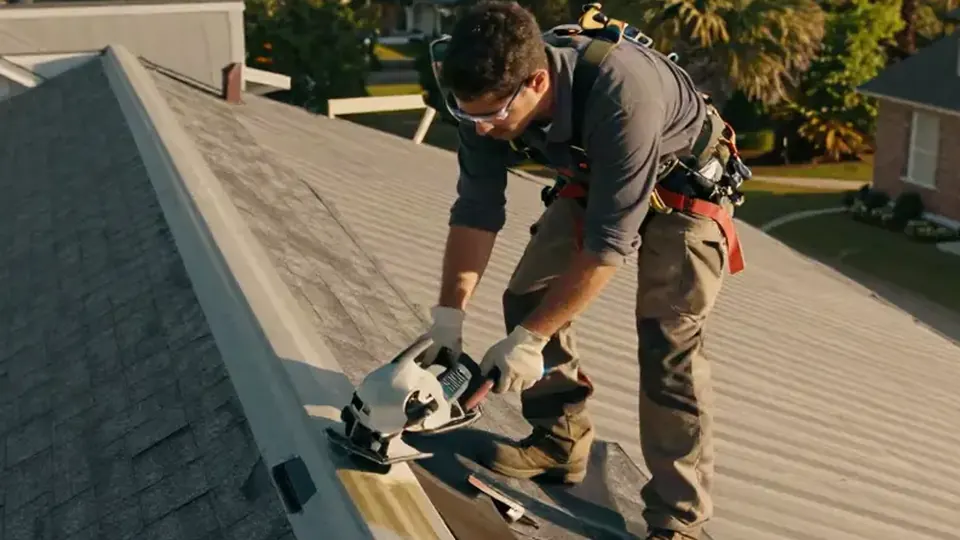
Active water entry damages insulation, drywall, flooring and belongings quickly. It is worth acting the same day if you can.
Impact can break shingles or puncture the deck. The visible hole is often smaller than the damaged area around it.
Bare patches expose the underlayment, which is not designed to be a long-term rain barrier.
This usually means water is pooling above the drywall. Keep people and furniture away and be careful around wet light fixtures.
Moisture around electrical components is a safety risk. Stay clear and consider shutting off power to that area if you can do so safely.
Several openings usually call for a larger temporary cover and a full inspection once the weather clears.
For a small opening, damaged material is removed and the area is sealed or covered with a temporary waterproof layer so water sheds past it.
For larger damage, a heavy-duty tarp is run over the area, up and over the ridge where needed, and fastened to the roof deck with wood strips so wind cannot lift it.
A failed vent boot, flashing joint or chimney edge can often be sealed temporarily to carry you through a storm.
Photos before and after the temporary work give you a record of the condition for repairs and for an insurance claim.
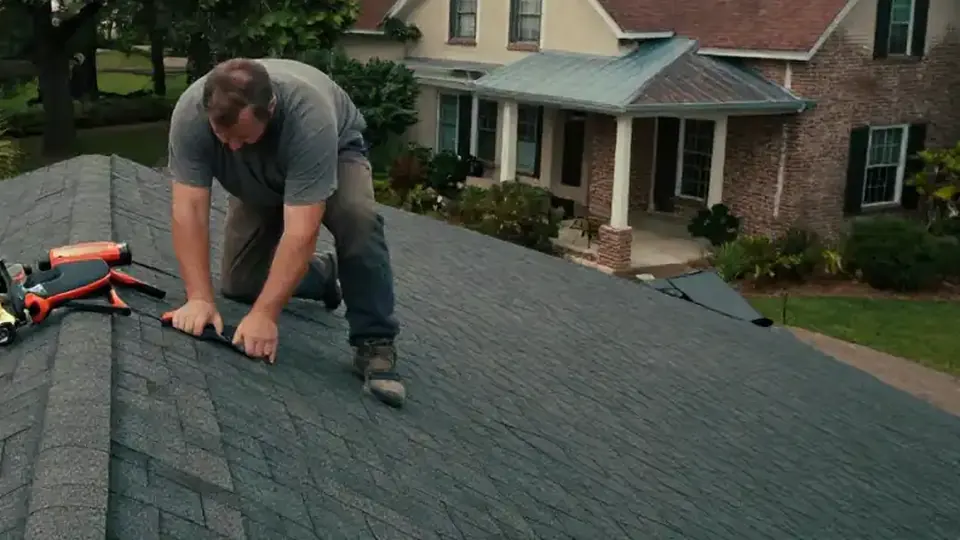
Tell us where water is coming in, what the weather is doing and whether anything hit the roof.
Move belongings, catch drips and keep clear of wet fixtures while the roof is addressed.
Where conditions are safe, the opening is covered or sealed to stop more water entering.
Once the weather allows, the whole roof and the attic are checked for damage beyond the obvious spot.
You get a clear scope for the permanent fix, whether that is a repair or something larger.
The right answer depends on the cause, the roof’s age and condition. Here is how to think about it.
The damage is limited, the roof is otherwise sound and the permanent repair can be scheduled soon after the weather clears.
There is widespread storm damage, the decking is soft or wet, or the roof was already near the end of its life.
What is being done, how long the temporary measure is expected to last, and what the permanent repair would involve.
Leaks rarely have a single cause. These related services cover the other places water commonly gets in.
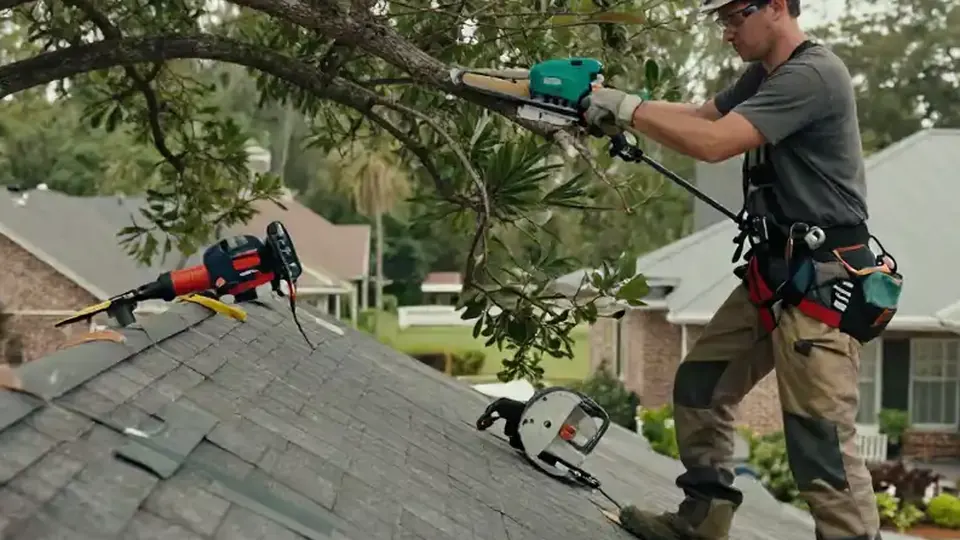
Wind, hail and fallen limbs: find the damage, document it and repair the leak.
Explore this service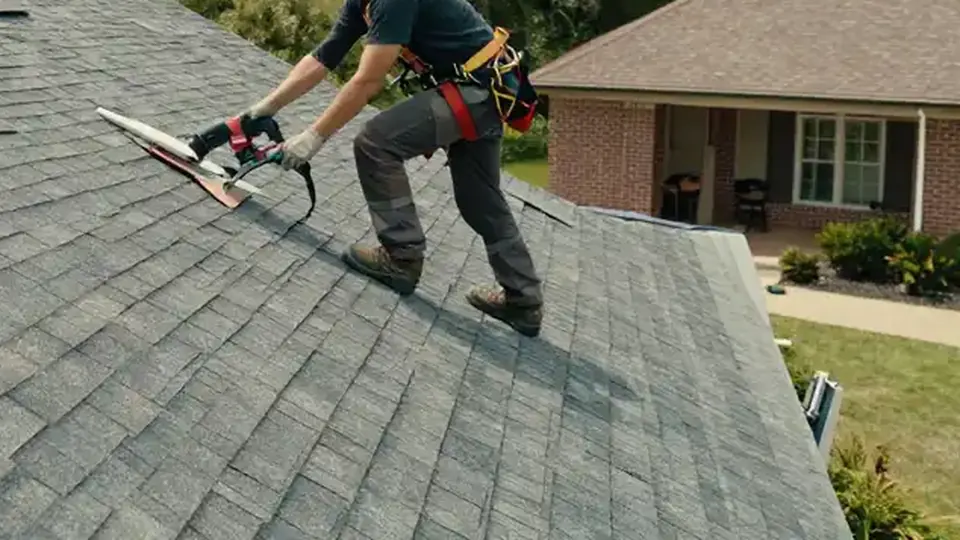
Trace the stain back to the real entry point before anything gets repaired.
Explore this service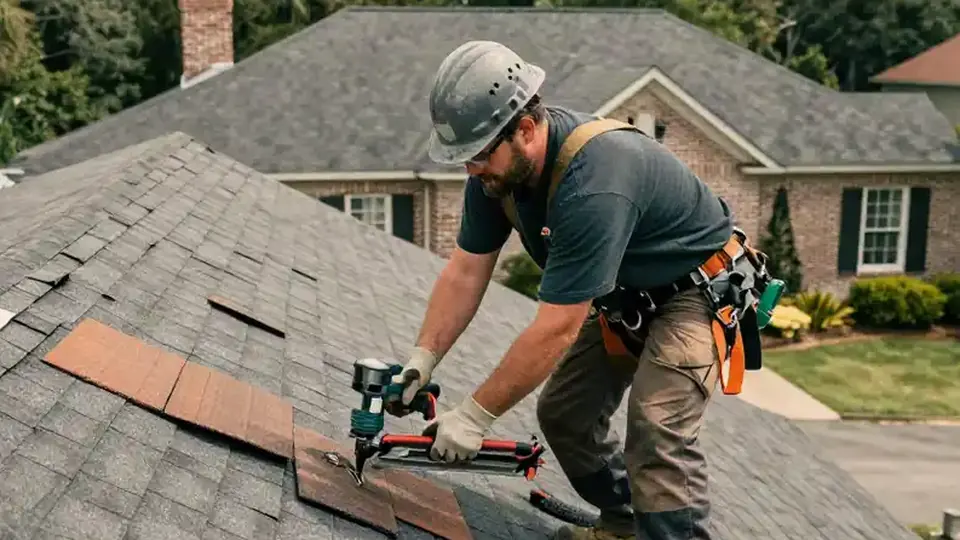
Cracked, lifted or missing shingles: targeted repair that actually stops the leak.
Explore this serviceWant to know what repairs involve before you call? Read our guides to roof leak repair costs in Baton Rouge, common roof repair price factors and what to do when your roof leaks in heavy rain. Back to the main roof leak repair page.
No. A tarp is temporary protection. The roof still needs a permanent repair, and the sooner that happens the less chance water finds a way around the tarp.
It depends on the tarp, how it was installed and the weather. Treat it as a stopgap and plan the permanent repair promptly.
No. Wet and storm-damaged roofs are dangerous. Protect the inside of the house and let a roofer handle roof access.
It depends on your policy and the cause of the damage. Many policies expect you to take reasonable steps to prevent further damage, so keep photos and receipts and ask your insurer.
Where water is entering, when it started, what the weather is doing, whether anything fell on the roof and the approximate age of the roof.
Yes. Once the roof is dry and accessible, the damage is assessed and you receive a scope for the permanent repair.
Not seeing your question? Send us a message and we will explain it plainly.
Ask the local teamSelect your area for local roofing details, or contact us to confirm your address.
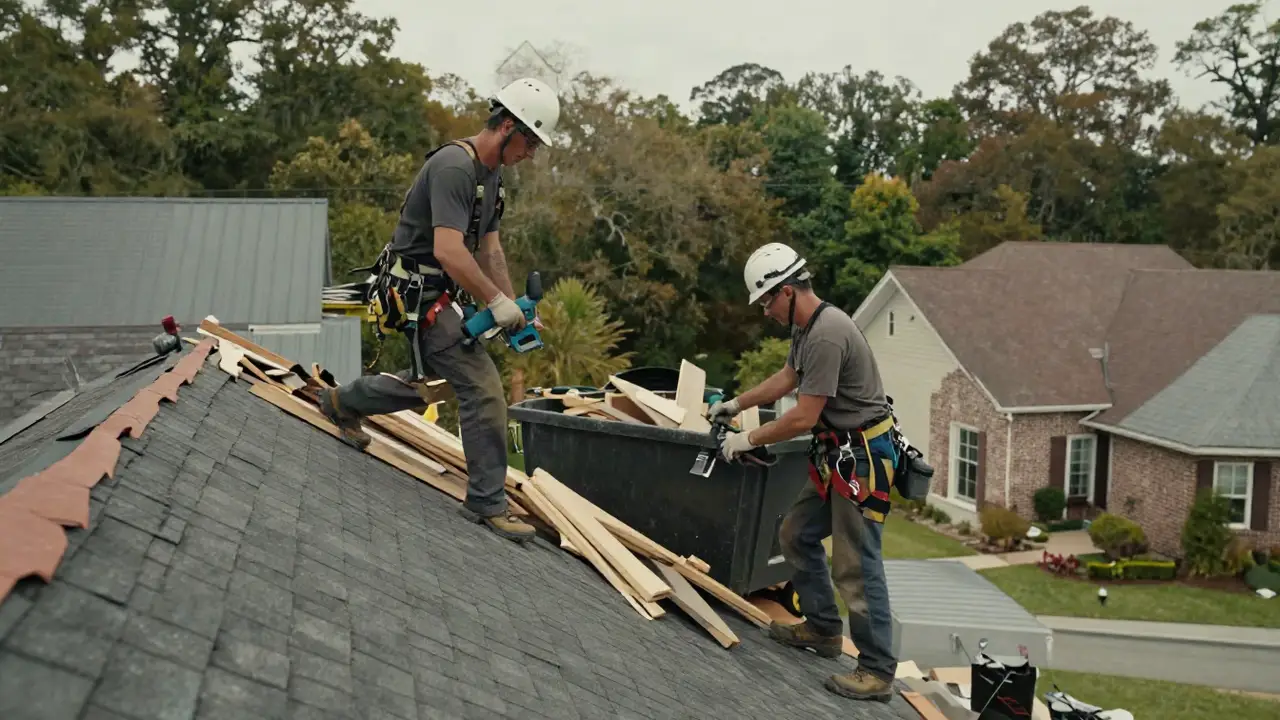
Send a message through the form and tell us what you are seeing. Include the location of the stain or drip and when it appears so the team can understand what help you need.